August sits deep inside Amboseli‘s dry-season core — one of the most consistently reliable months in the park’s calendar. If July is when the dry season establishes itself, August is when it delivers on its promise. The conditions are stable, the wildlife is concentrated, the roads are firm, and the chances of a clear Kilimanjaro dawn are among the highest of the year.
For travellers who want the most straightforward version of what makes Amboseli famous, August is one of the safest months to choose.
Weather in August
Planning the trip itself? See TouringInsights’s How Much Does a Safari to Amboseli Really Cost? (2026) for current prices, dates and what is included.
August is dry, clear, and cool by morning. Rainfall is minimal — one of the lowest months in the annual cycle. Days are warm and sunny. Mornings — particularly in the first two hours after first light — can be cool enough to warrant a warm layer on an open game drive vehicle.
The vegetation at this point in the dry season is at its most open. Grasses are short and dusty. The swamp systems remain full despite the dry conditions (the Kilimanjaro snowmelt that feeds the underground aquifers does not depend on local rainfall). The overall visual character of August Amboseli is open, unobstructed, and bright.
Dust is a feature of August drives on some circuits, particularly on windy afternoons. Protecting cameras and optical equipment is worth bearing in mind.
Wildlife in August
August is an excellent month for wildlife observation across the board.
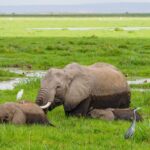
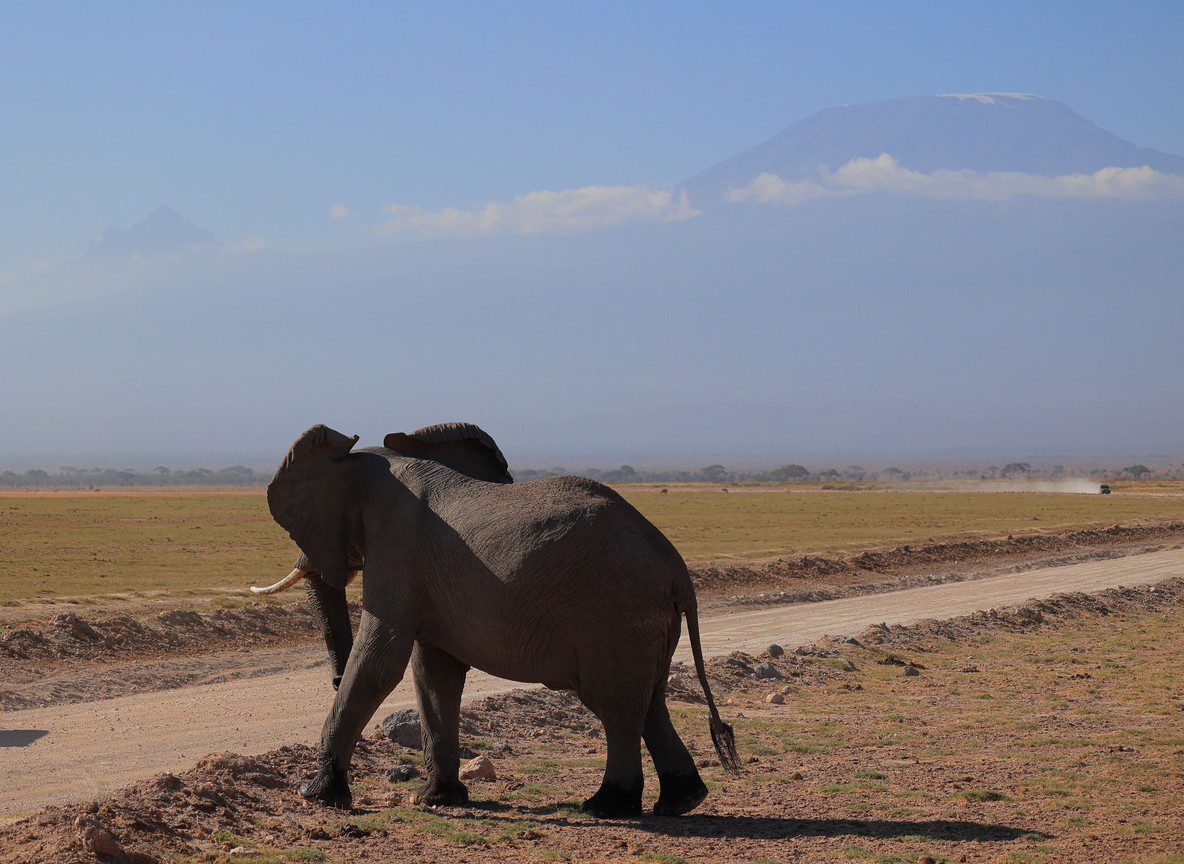
Elephants: Reliable and abundant. Herd movement between the swamp systems and the open plains follows well-established dry-season patterns that experienced guides can track effectively. Herds of forty to eighty individuals are regularly encountered at the swamp edges and on the short-grass plains.
Big cats: Lions are regularly encountered, particularly on the open swamp margins and in the denser vegetation near Ol Tukai. Cheetahs use the open grassland and are periodically spotted. August’s short grass significantly improves the chances of locating predators that would be harder to find in the longer vegetation of the wet months.
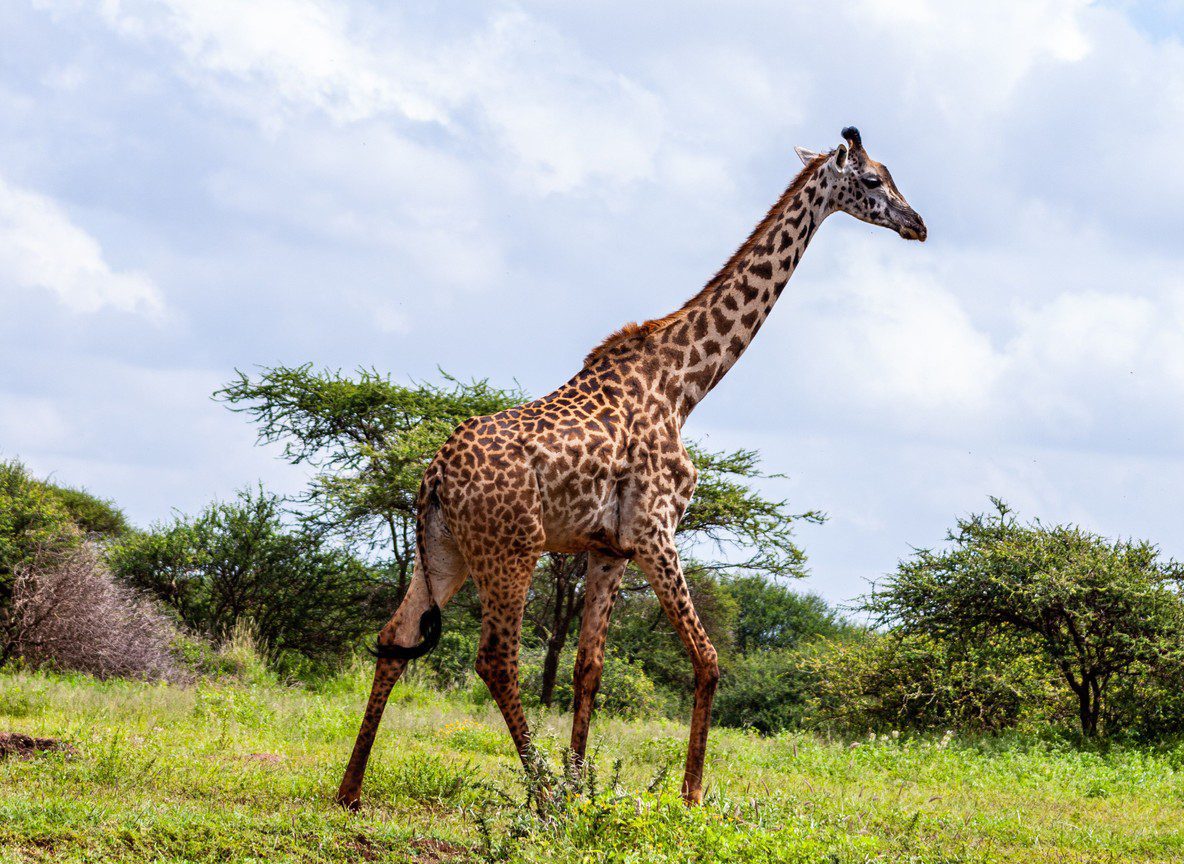
Other mammals: Buffalo herds, zebra, wildebeest, and giraffe are all reliably visible. Hippos remain in the swamp channels.
Birds: Resident species are all present. The Palearctic migrants have departed by August, so the species count is lower than in the November to April period. The wetland bird community remains strong with herons, egrets, storks, and waders at the swamp margins.
Kilimanjaro Views in August
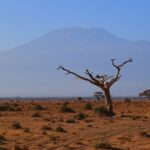
August is one of the strongest months for Kilimanjaro visibility. The stable dry-season atmosphere, low humidity, and absence of convective cloud in the early morning make dawn drives the most reliable window. In a typical August stay, the mountain is clearly visible on most mornings — the main variable is whether high-altitude cloud forms at the summit later in the day.
The standard advice applies: be on the vehicle early, no later than 6am, and commit to the dawn window. Mountain clarity in August is often best in the first 90 minutes of light.
August for First-Time Visitors
August is one of the strongest months for first-time visitors to Amboseli. The combination of reliable elephants, good predator search conditions, high Kilimanjaro visibility, and easy planning makes it a month where the park consistently meets — and often exceeds — expectation.
The trade-off is that August is a peak-demand month. Rates at popular camps reflect this. Camp availability can be tighter than in the shoulder or low seasons, particularly for short-notice bookings at the most sought-after properties. Planning ahead by three to six months is realistic for August.
How Many Nights in August
Two nights is workable for an efficient August safari, particularly if Amboseli is one stop on a longer Kenya itinerary. Two nights gives four game drives (two mornings, two afternoons) and a reasonable probability of good sightings and at least one clear Kilimanjaro dawn.
Three nights is better if Kilimanjaro photography is a priority. Three mornings substantially improves the odds of getting the specific mountain condition you are hoping for — fully clear summit, specific light quality, particular foreground subject. Three nights also allows a more relaxed pace that suits photography work.
Four nights suits travellers whose primary interest is photography or wildlife behaviour observation and who want maximum time in the field rather than rushing to the next destination.
Packing for August
August is the easiest Amboseli month to pack for. The conditions are predictable:
- Warm layer for dawn drives — the open vehicle can feel cold in the first hour before the sun rises
- Neutral mid-weight clothing for daytime
- Sun hat and sunscreen — the midday sun is strong
- Dust protection for cameras (plastic bag inside camera bag, or a rain cover repurposed as a dust cover)
- Binoculars
There is no need for rain gear in August. The month is the closest Amboseli gets to purely dry conditions.
August vs Other Dry-Season Months
| Factor | July | August | September | October |
|---|---|---|---|---|
| Rainfall | Very low | Very low | Very low | Increasing |
| Kilimanjaro visibility | Excellent | Excellent | Very good | Declining |
| Wildlife concentration | High | High | High | High |
| Crowd levels | Peak | Peak | Moderate-high | Moderate |
| First-time suitability | Very high | Very high | Very high | High |
August and July are interchangeable for most purposes. August sometimes feels slightly less crowded than the peak of school-holiday July. September transitions to slightly less busy conditions while maintaining the same dry-season quality. For most travellers, any of these three months will deliver an excellent Amboseli experience.
August at a Glance
| Factor | August Conditions |
|---|---|
| Rainfall | Minimal |
| Wildlife visibility | Excellent |
| Kilimanjaro views | Very strong |
| Road conditions | Firm, dry, some dust |
| Crowd levels | High — peak season |
| Best for | First-time visitors, wildlife-focused, photography |
| Main limitation | Peak rates and demand |
For more on Amboseli timing, see the Amboseli animals month-by-month guide and the dry season vs green season in Amboseli on Touring Insights.
Have questions about this itinerary or destination? Get answers from a safari specialist before you commit.
Inquire More